Alignment is the job nobody comes in for. People come in for tyres, and then we turn the wheel, look at the inner shoulder, and have the awkward conversation about why a tyre fitted fourteen months ago has worn through to the cords on one side while the rest of it looks nearly new.
Tracking is not glamorous and it will never feel like money well spent in the moment. It is still one of the cheapest things you can do to make a set of tyres last.
What tracking actually is
Your wheels are not simply bolted on pointing straight ahead. They sit at deliberate angles, set by the manufacturer, and the main one for tyre wear is toe, which is whether the front of the wheels point slightly in towards each other or slightly out. Fractions of a degree. That is all it takes.
When toe is out, the wheel is being dragged along the road at a slight angle for every single mile you drive. The tyre is not rolling cleanly, it is scrubbing sideways as it goes. You cannot feel it happening, but the rubber can.
It goes out because of the roads. Potholes, kerbs on tight village lanes, speed cushions taken at an angle, the sunken drain covers around town. A decent whack into a pothole on a wet night is more than enough to shift it, and so is parking against a kerb harder than you meant to.
Sign one: the steering wheel is not centred
You are on a straight, flat bit of road and the badge in the middle of the wheel is sitting off to one side. This is the classic. The car goes straight, so people learn to live with it, and it stays that way for years while the tyres pay for it.
Sign two: the car pulls to one side
Loosen your grip on a straight road with a decent camber and see what happens. A slight drift left on a British road can just be the camber of the road itself. A steady, definite pull that you have to correct constantly is not.
Worth ruling out the simple stuff first: uneven tyre pressures cause exactly the same feeling, and so can a dragging brake or a badly worn tyre on one side.
Sign three: the wheel does not self centre
Come off a roundabout and let the wheel come back through your hands. It should return towards centre by itself, smoothly. If you have to feed it back manually every time, or it comes back further one way than the other, something in the geometry is off.
Sign four: one edge of a tyre is worn and the rest is fine
This is the one that costs money. Inner shoulder worn down to nothing while there is 5mm across the rest of the tread. On a lot of cars the inner edge is hidden behind the wheel arch, so you will not spot it unless you turn the steering onto full lock and have a proper look, or crouch down and run your hand round the back of the tread.
Do that check on both front tyres about once a month. It takes thirty seconds and it is the earliest warning you will get.
Sign five: the tread feels sharp and feathered
Run your palm flat across the tread, from the inner edge to the outer. If it feels smooth going one direction and catches like a saw going the other, the tyre is being scrubbed sideways. That is feathering, and it is alignment nine times out of ten. You will often hear it too, as a low drone that changes pitch when you steer gently left and right at about 40mph.
Sign six: you know exactly when it happened
You hit something. A pothole that made everyone in the car wince, a kerb on a mini roundabout, a lump of debris on a slip road. The car has felt slightly different since and you have been telling yourself it is fine. Get it checked. Impacts are the single most common cause we see.
What bad alignment costs in real money
Toe that is only slightly out can knock thousands of miles off a set of tyres, quietly, without you ever noticing until they are worn. Badly out, and we have seen a brand new tyre taken down to the cords on one edge inside a few months. That is a whole tyre thrown away for the sake of a job that costs a fraction of the price.
There is a fuel cost too. A tyre being dragged sideways is a tyre making drag, and drag is fuel. It is not dramatic, but it is there every mile.
And there is the bit that does not show up on a receipt: a car that is out of line does not respond as cleanly, does not brake as evenly, and does not feel as settled in the wet. Most people only notice how bad it had become after it is corrected.
When alignment is not the real problem
Adjusting the tracking on a car with a worn suspension part is a waste of your money, and any fitter who does it without telling you is not doing you a favour.
Worn wishbone bushes, tired track rod ends, a dropped link, a failing wheel bearing and worn shock absorbers can all produce the same symptoms: pulling, uneven wear, vibration, a wheel that will not sit straight. Set the toe on a car with a knackered bush and it will hold for about a fortnight before it wanders back out.
So we look before we adjust. If we can see play in something, we tell you what it is and what needs doing first, even when that means you are going elsewhere to get the part changed before you come back to us. Doing the job in the right order is cheaper for you than doing it twice.
Vibration is usually balancing, not alignment
Worth separating these two, because people mix them up constantly. A vibration that comes in around 50 to 70mph and hums through the steering wheel or the seat is almost always wheel balancing. Uneven tyre wear and steering that pulls or sits off centre is alignment. Different jobs, different fix. Balancing is included whenever we fit a tyre here, so if the car came back from us with a wobble, bring it straight back and we will sort it.
What happens when we check it
The car goes on the ramp, we look over the steering and suspension components first for play and perished bushes, then the wheels get measured against the manufacturer's figures for that model. You get told what the readings are and how far off they sit, and if adjustment is needed we set the track rods until the numbers are where they should be, then road test it to make sure the wheel sits straight in your hands rather than just straight on a screen.
Most cars only need the front toe setting and it is a while-you-wait job. Some cars have adjustment at the rear as well, and on those it is worth doing both, because rear toe being out will scrub tyres just as happily as the front and it is far harder to feel through the steering.
How to keep it right once it is done
Take the kerbs gently, especially the high ones round the newer estates. Slow down for potholes rather than braking hard as you hit one, because braking loads the front suspension and makes the impact worse. Check your pressures monthly. And whenever you buy tyres, get the tracking checked at the same time, so the new rubber starts its life rolling straight instead of scrubbing itself away from day one.
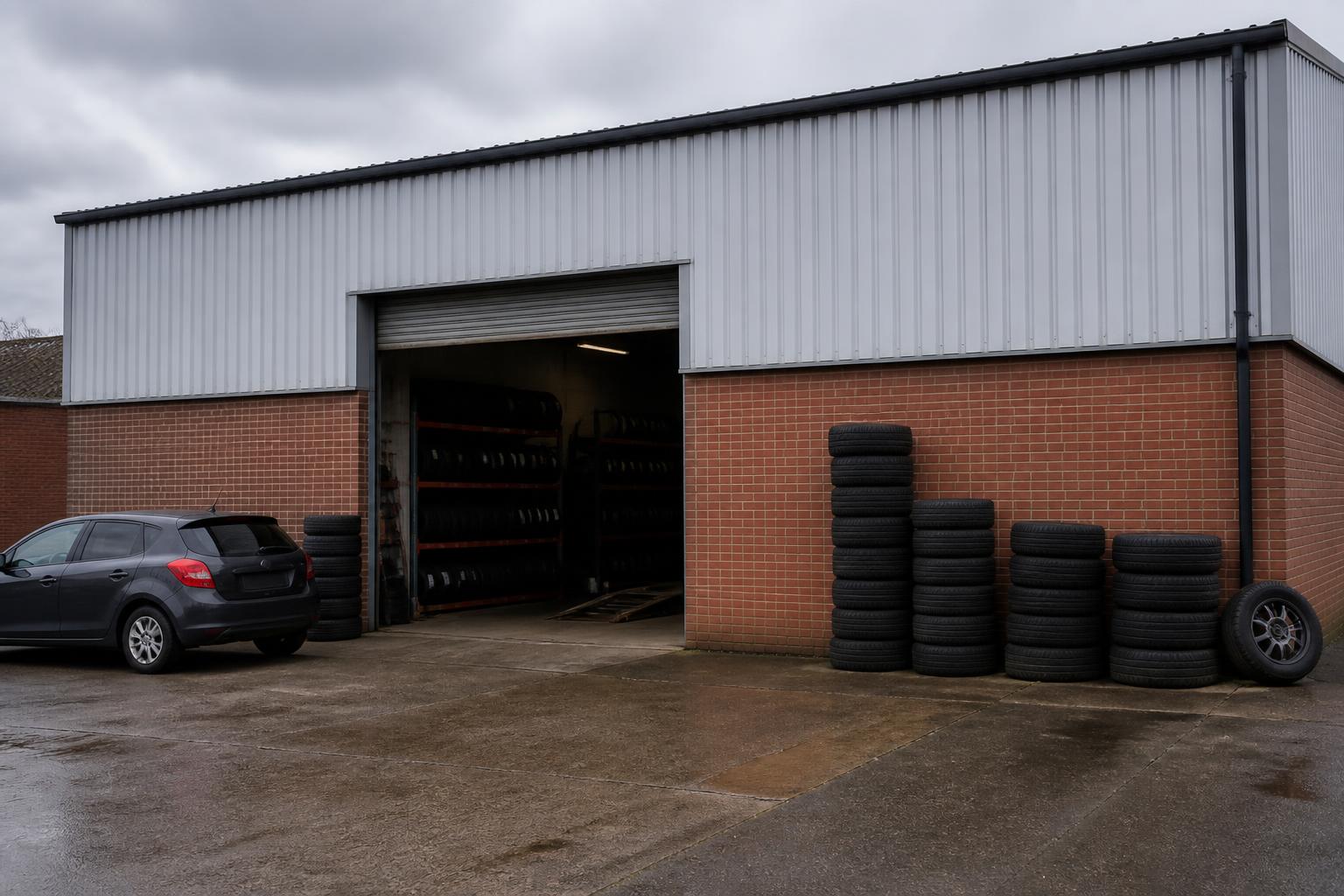
Drive into the workshop on Broad Road Monday to Saturday between 9am and 6pm and we will check it for you. If it needs adjusting we can normally do it there and then while you wait, and if we think the problem is a worn part rather than the tracking, we will tell you that instead. Call 01376 433951 if you would rather have a word first.